

• Gen Z Founders: Building the Next Wave of AI-Native Companies

    The 2025 Forbes 30 Under 30 list reveals a fundamental shift: the most recognized young entrepreneurs aren’t adding AI to traditional business models; they’re building companies where AI is the business model itself.

    This year’s honorees reflect a generation that treats automation as infrastructure rather than innovation. Gen Z founders are replacing entire workflows; hiring, sales, and finance with AI-powered systems that enable small teams to operate at scales previously reserved for large departments. The acceptance rate for the U.S. list sits around 2% to 3% from roughly 20,000 nominations, making it one of the most competitive benchmarks for early-career achievement.

    The pattern is clear across categories. Healthcare honorees are developing technologies to treat tumors. The dedicated AI category recognizes those “automating the way we live, work, and create.” Food and drink innovators are expanding electric vehicle charging infrastructure. These aren’t incremental improvements, they’re deep technology plays tackling complex, high-value problems.

    What’s happening behind the scenes is a shift in how work gets structured. Successful ventures are implementing what’s called “agentic AI”-systems that act autonomously without constant human input. This requires robust workflow engines that manage end-to-end processes, not just individual tasks. In practice, this means AI takes care of repetitive and data-heavy work, so founders can devote their energy to higher-level strategy and innovation.

    The list also functions as a predictor of massive future success. Alumni like Sam Altman of OpenAI and Alexandr Wang of Scale AI have built billion-dollar fortunes, often centered on AI and automation technologies.

    Metro Atlanta’s startup ecosystem is growing, particularly in fintech, creative industries, supply chain, and life sciences. Young talent is emerging across these sectors, though the city doesn’t yet appear at scale in national recognition lists compared to coastal tech hubs. The infrastructure is building accelerators, venture capital, and  industry-specific opportunities. However, a visibility gap remains.

    If you’re exploring how agentic AI could expand your team’s capacity, Westside Data Solutions LLC is ready to collaborate.
  • When Chip Design Gets Faster, Everything Downstream Shifts

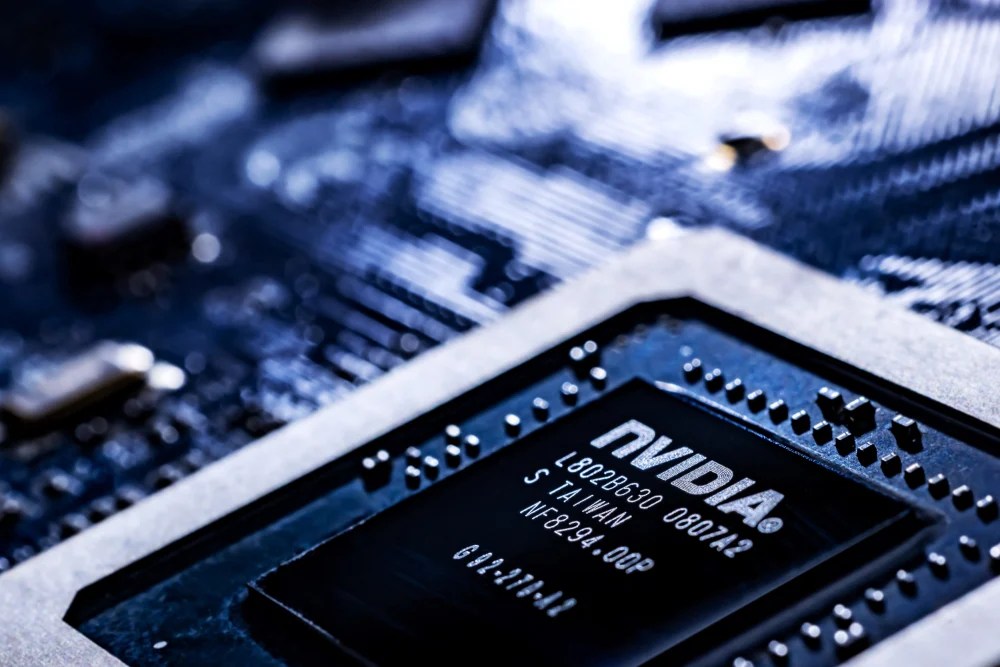
    NVIDIA just invested $2 billion in Synopsys, and the promise is simple: chip design simulations that used to take weeks might now take hours.

    Synopsys provides software tools that help semiconductor companies design and verify chips before they are manufactured. In July 2025, Synopsys acquired Ansys, which brought advanced simulation and analysis to its design automation platform. This expanded capability is significant: designing AI chips now requires both robust design tools and accurate simulation of real-world performance.

    The NVIDIA partnership centers on embedding GPU-accelerated computing into Synopsys’ workflow. Early results suggest design teams could see 30x faster simulation times. For companies building complex semiconductors, especially for AI and high-performance computing applications, that kind of speed reduction changes project timelines and competitive positioning.

    What’s Happening in Atlanta

    Metro Atlanta sits at an interesting intersection of this trend. While Synopsys has closed its Atlanta office, the company remains connected to Georgia Tech through the Computer-Aided Design lab on reinforcement learning for chip design optimization. Their joint research won the DAC 2023 Best Paper Award.

    Three Atlanta-based semiconductor startups serve the AI and high-performance computing markets directly: Plaid Semiconductors (glass substrates for AI chiplets), Saras Micro Devices (power delivery solutions), and Carbice Corporation (thermal management). Faster design and verification cycles could compress their time-to-market.

    The region’s aerospace sector also creates natural demand. Lockheed Martin, Gulfstream, and 800+ aerospace suppliers require advanced semiconductor design for avionics and mission-critical electronics. Synopsys explicitly markets aerospace and defense verification solutions.

    Georgia’s $65 million AI in Manufacturing initiative and Georgia Tech’s $285 million Semiconductor Research Corporation partnership create institutional support for this kind of innovation.

    When design cycles compress, the operational rhythm of R&D teams shifts. Faster iteration means more experiments, tighter feedback loops, and potentially different staffing models for verification and testing workflows.

    If you are exploring how automation and faster workflows could reshape your operations, Westside Data Solutions LLC is ready to guide you.

  • Industrial and Technology Demand Push Silver to New Highs

    Silver prices reached record territory in late November 2025, driven not by speculation but by a structural supply deficit that shows no signs of easing.

    The metal is caught in a squeeze. Industrial applications now account for nearly 60% of total silver consumption, a sharp departure from its traditional role as primarily a monetary asset. Solar panel manufacturing alone is projected to consume 14% of global silver demand this year. Each gigawatt of new solar capacity requires hundreds of thousands of ounces.

    Electric vehicle production adds another layer of pressure. Analysts estimate EV manufacturing will consume more than 90 million ounces annually as automakers scale production of battery management systems, electrical contacts, and charging infrastructure.

    Then there’s the AI economy. The expansion of data centers and high-performance computing infrastructure is creating unprecedented demand for silver-based materials used in advanced circuitry and thermal management. Market projections suggest AI will contribute $15.7 trillion to the global economy by 2030, with corresponding increases in the specialized electronics that depend on silver’s superior conductivity.

    Mining operations are responding with technology. The global mining automation market is approaching $4 billion in 2025 as companies deploy robotics, autonomous drilling equipment, and AI-powered predictive maintenance systems. Digital twins are being used to optimize performance at complex mine sites. Machine learning algorithms analyze geological data to improve exploration efficiency and reduce downtime.

    Recycling workflows are also innovating. With the market facing its fifth consecutive year of structural deficit, new automated sorting processes and chemical recovery methods are being developed to reclaim silver from electronic waste, end-of-life solar panels, and industrial catalysts.

    The industrial metals landscape is evolving as companies manage tight supply, respond to increasing demand, and implement automation throughout the value chain.

    If you’re exploring how automation can create operational capacity in your organization, Westside Data Solutions is here to help you move from data to direction.

  • Small Business Saturday 2025: When Local Commerce Meets Quiet Automation

    Small Business Saturday 2025 arrives on November 29th as a $17 billion annual moment when consumer preference for local discovery collides with the operational reality of managing holiday volume.

    The numbers tell a clear story. 41% of total consumer holiday spending is expected to flow to small businesses this year, up from previous benchmarks. Seventy-seven percent of U.S. consumers plan to shop in person at independent retailers, while 53% will also shop online. The dual-channel expectation is now standard, not optional.

    What makes this trend operationally significant is not the sales spike alone, but the infrastructure required to handle it. Small businesses are deploying accessible automation tools to manage predictive inventory, personalized email campaigns, and integrated point-of-sale systems that unify in-store and online transactions. Platforms like Shopify and Square are enabling businesses to synchronize inventory across channels in real time. AI copywriting tools are being used to segment customer lists and generate targeted promotions, making marketing resources more accessible.

    In Metro Atlanta, the trend is embedded in local economic strategy. Invest Atlanta is actively promoting Small Business Saturday to the city’s 199,000 small businesses. The Atlanta Beltline activated four marketplace locations on November 29th, partnering with the Atlanta Indie Marketplace to feature local makers, artisans, and food vendors. This is not only a grassroots activity but coordinated institutional support designed to channel consumer spending into community-based commerce.

    The operational pattern is consistent: automation is being used not for transformation, but for specific workflow efficiencies. Chatbots handle routine inquiries. Predictive analytics reduces stockouts. Email automation scales personalized outreach. These are small, high-value interventions that expand capacity.

    Seventy-three percent of adults report finding better, more unique gifts at small businesses. The competitive advantage remains product curation and personalized service. The automation layer simply enables that experience to be delivered at scale during a compressed holiday window.

    If you are exploring automation for your own operations, Westside Data Solutions is ready to guide you.

  • Apple Intelligence Brings Automation to the Device You Already Own

    Apple is embedding generative AI directly into iPhones, Macs, and Apple Watches, shifting automation from the cloud to the hardware already in users’ pockets.

    The move centers on what Apple calls “personal intelligence.” Instead of routing requests through external servers, the system processes most tasks locally using a compact 3-billion-parameter model optimized for Apple Silicon. Features like live translation in Messages, intelligent email summarization, and workflow automation through the redesigned Shortcuts app now run entirely on-device.

    This architecture matters for organizations concerned about data exposure. Apple’s Private Cloud Compute handles more complex requests using Apple-controlled infrastructure, with cryptographic guarantees that data is processed and immediately deleted. For tasks requiring broader knowledge, users can optionally route queries to ChatGPT, but only with explicit approval.

    The practical impact shows up in workflow automation. The Shortcuts app is transitioning from a manual scripting tool to an intelligent agent that understands natural language commands. A user can describe a desired outcome, and the system constructs the multi-step automation across apps without manual configuration.

    For developers, the Foundation Models framework provides direct access to the on-device model through Swift with minimal code. Third-party apps can now build intelligent features that function offline and without cloud API costs.

    Businesses are closely watching the privacy architecture. Companies in regulated sectors see value in automation that doesn’t require sending proprietary data to third-party cloud services. The on-device processing rate Apple is targeting (95%+ by Q4 2025) contrasts sharply with competitors’ estimated average of 30%.

    The pattern emerging is automation becoming ambient rather than application-based. Tasks that once required opening multiple apps and manually transferring information can now be performed with a single natural-language request, processed privately on local hardware.

    If you’re exploring how on-device automation could reduce manual work in your organization, Westside Data Solutions is ready to help you identify practical starting points.