• Stocks Retreat; AI Valuations Heighten Investor Anxiety

    The Dow Jones Industrial Average reached new highs in December 2025 while investors simultaneously grappled with concerns about AI-driven market sustainability.

    This bifurcation reveals something worth watching. Major indices climb even as companies like Oracle and Broadcom face scrutiny over their AI performance metrics and future outlooks. The S&P 500, now heavily weighted toward artificial intelligence companies, moves with particular sensitivity to these shifts. Investors rotate out of technology behemoths when AI valuations raise questions, creating ripples across the broader financial ecosystem.

    The numbers tell part of the story. Global private AI investment hit $109.1 billion in 2024. Enterprise spending on generative AI jumped from $11.5 billion in 2024 to $37 billion in 2025. AI-related investments accounted for 51% of global venture capital deal value in Q3 2025.

    Yet the market is searching for something more concrete than projections. Investors want tangible evidence of AI-driven productivity and revenue growth, not just potential. This creates an environment where some AI stocks experience meteoric rises while others see significant sell-offs, contributing to volatility even amid overall market gains.

    What’s Happening in Metro Atlanta

    Georgia reports 8.6% of its workers face potential AI-related job displacement, slightly below the national average. Atlanta’s fintech sector integrates AI into financial technologies rapidly. Healthcare AI initiatives, driven by Georgia Tech and the state government, focus on accessible care through AI-augmented decisions. The city’s logistics and manufacturing operations explore AI for predictive maintenance and supply chain optimization.

    Behind these market movements, businesses are reimagining operational processes. Companies move beyond automating simple tasks to integrating AI into core functions. The focus shifts toward what analysts call hyperautomation, where multiple technologies combine to streamline processes across organizations.

    The gap between AI investment and scaled enterprise integration remains notable. While some sectors lead adoption, others lag, creating disparities in efficiency and competitive advantage.

    If your organization is exploring how automation fits into daily operations without adding complexity, we’re here to help you think through practical next steps that match your actual capacity and goals.
  • Oracle Stock Tumbles After Earnings Miss Cloud Expectations

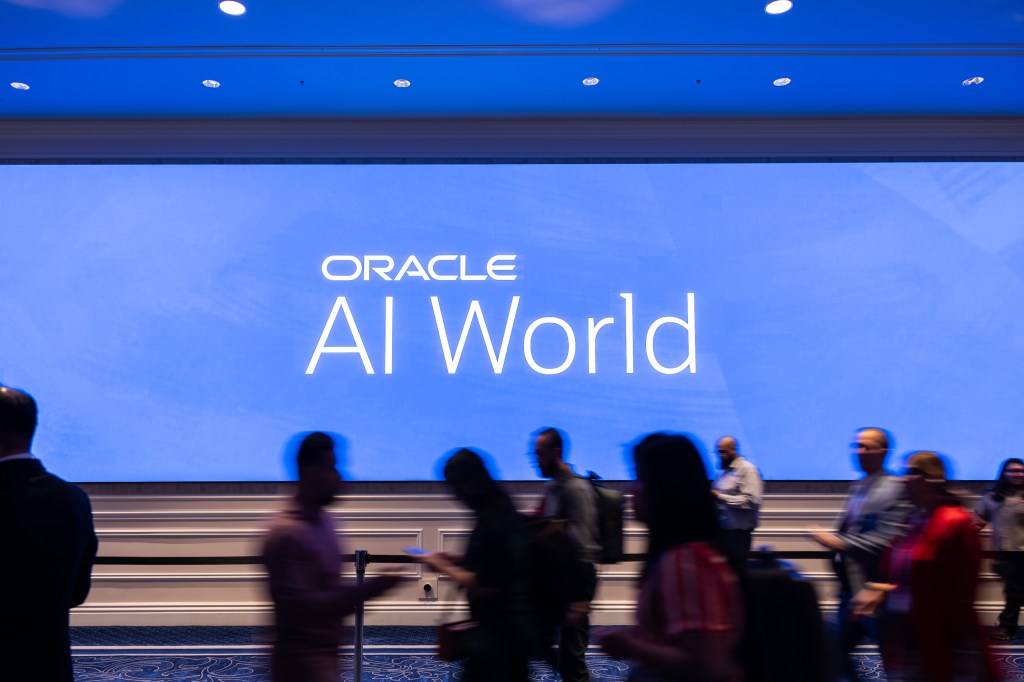
    Oracle shares fell over 12% in premarket trading on December 11, 2025, after its quarterly earnings report showed revenue of $16.06 billion, below the $16.19 billion analysts expected.

    The company reported 14.2% year-over-year growth for Q4 CY2025. Yet its forecast for third-quarter revenue growth, between 16% and 18%, landed under the 19.4% estimate of $16.87 billion. (Sources: CNBC, Reuters, Yahoo Finance)

    Investors watched closely as Oracle highlighted heavy capital expenditures for cloud and AI infrastructure. Partnerships with Nvidia and Meta underscore its role in supporting AI workloads through expanded data centers.

    These investments aim to handle growing demand for cloud services. Local examples appear in Metro Atlanta, where the City of Atlanta runs its finance, procurement, human resources, and performance management on Oracle Cloud ERP, EPM, and HCM platforms. This setup has delivered $17.5 million in savings over 10 years.

    Oracle maintains an office at 3343 Peachtree Rd NE in Atlanta. Job postings for Oracle developers and consultants fill the local tech scene, supporting enterprise systems.

    Cloud platforms like these handle repetitive data tasks automatically. Finance teams process invoices without manual entry. HR workflows route approvals seamlessly.

    Patterns emerge in how organizations scale operations. Public sector users modernize without new hires. Tech roles focus on integration over basic maintenance.

    – Revenue misses prompt market shifts, even after 87% year-to-date gains.

    – CapEx rises to build AI-ready capacity.

    – Customers like Atlanta’s city government rely on these systems daily.

    Atlanta’s fintech and life sciences sectors see ripple effects through better financial and HR management.

    If your team manages data-heavy workflows, consider mapping one process to cloud automation tools. Westside Data Solutions LLC offers workflow audits to spot quick capacity wins in your business operations.

  • GE Vernova Deploys AI for Grid Optimization as Atlanta Office Expands

    GE Vernova allocates $9 billion in global capital expenditures to support rising electricity demands, including those from data centers.

    The company operates across Power, Wind, and Electrification segments. It develops gas turbines compatible with hydrogen and invests in onshore and offshore wind solutions. Grid modernization efforts focus on resilient networks for distributed energy resources.

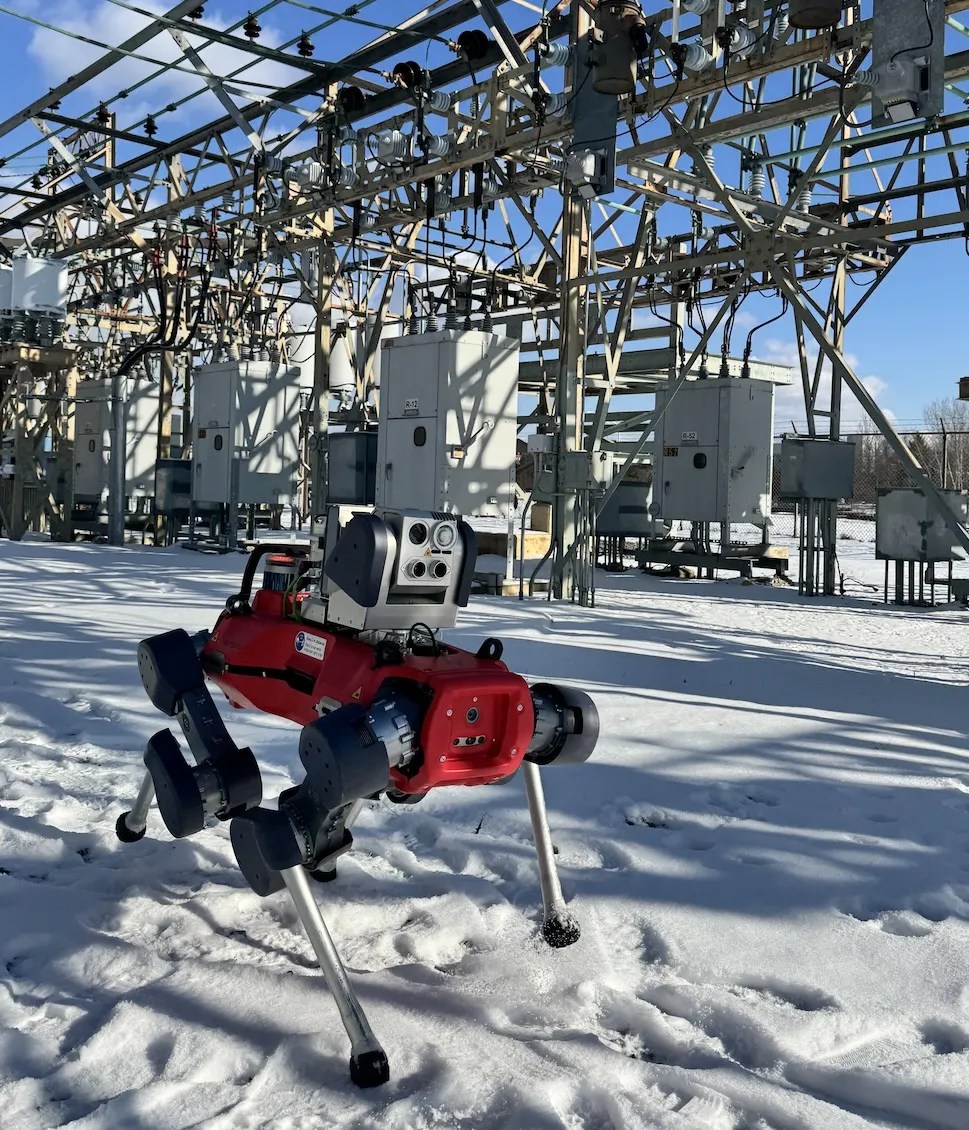
    AI integration appears throughout its operations. Asset Performance Management software uses AI to enhance energy asset reliability. Computer vision tools enable asset inspections and monitoring. Systems forecast power demand and stabilize grids amid renewable energy growth.

    Digital twins and AI modeling, developed with partners like SAP, simulate infrastructure resilience. GE Vernova reports a 51% reduction in Scope 1 and 2 emissions from 2019 to 2024. Its technologies contribute to 30% of global electricity generation.

    In Metro Atlanta, GE Vernova maintains an office at 600 Galleria Parkway SE. The company recently relocated to a smaller space near The Battery. Job postings seek local talent for roles like Solutions Engineer, Product Manager, and University Recruiting Partnership Manager.

    These positions span strategic projects and energy solutions. Recruitment draws from Atlanta’s workforce in cleantech and technology sectors.

    Automation workflows enter naturally here. AI-driven forecasting reduces manual grid adjustments. Computer vision streamlines inspections, freeing teams for higher-value tasks.

    Utilities adopt such digital tools for decarbonization. GE Vernova’s software aids navigation of energy markets.

    Atlanta organizations in cleantech see parallel opportunities. Local teams build capacity through data-driven energy management.

    Westside Data Solutions LLC supports Metro Atlanta groups exploring these patterns. Connect with us for straightforward ways to automate energy data workflows and reclaim operational time.

    Images credit: GE Vernova

  • Atlanta Universities Launch AI Hubs and Tools for Education and Operations

    Georgia Tech launches Tech AI hub, Morehouse deploys AI teaching assistants, Spelman forms an AI modernization committee, and Emory rolls out AI.Humanity initiative.

    These moves build on dedicated infrastructure. Georgia Tech’s Tech AI focuses on sectors like healthcare, manufacturing, and supply chain. Emory’s effort includes centers such as the Empathetic AI Health Institute, running on AWS high-performance computing.

    Morehouse experiments with 3D avatar assistants that provide 24/7 student support. Spelman develops generative AI curricula through partnerships such as Robert F. Smith’s programs and hosts AI ethics summits.

    Partnerships link these schools. Emory teams with Clark Atlanta and Georgia Tech on a $1.3 million Mellon grant to study AI’s societal impacts. Morehouse joins Amazon’s AI educator consortium; Spelman partners in Georgia’s AI Manufacturing Corridor.

    This aligns with broader builds in metro Atlanta. Data centers from xAI, Microsoft, and AWS handle AI business demands. The City of Atlanta’s AI Commission tests tools for water leak detection and public safety.

    HBCUs like Morehouse and Spelman emphasize inclusive talent pipelines. Their AI literacy pushes address biases and prepares students for fintech and healthcare roles.

    Operations see direct workflow shifts. AI assistants cut response times at Morehouse. Spelman’s blueprint targets faculty tools for streamlined tasks.

    Local fintech in Transaction Alley and groups like the Technology Association of Georgia offer upskilling. Georgia Tech’s AI Makerspace with NVIDIA equips projects in energy and transportation.

    Atlanta nonprofits and small businesses notice these patterns in education. AI handles repetitive queries, freeing staff for core work.

    Curious how similar automation fits your Metro Atlanta workflows? Westside Data Solutions LLC offers a no-pressure chat to map quiet efficiencies that expand your team’s capacity.

  • Agentic Workflows Reshape Business Processes

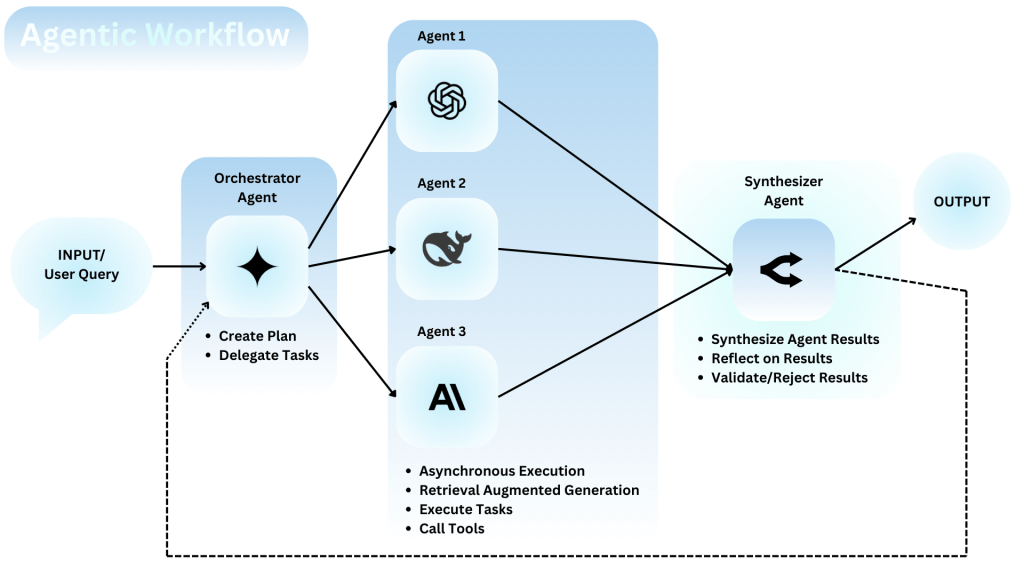
    Companies deploy AI agents that perceive environments, reason through options, and execute tasks with minimal human input.

    These agentic workflows move past fixed rules. AI systems now adapt to real-time changes in dynamic settings. Businesses integrate them into core operations, from marketing campaigns to risk assessments.

    Foodora uses tools like BrazeAI for customer engagement. Thomson Reuters applies agentic AI in legal and tax processes. Platforms from OpenAI, Microsoft, IBM, and Automation Anywhere enable natural language design of these systems.

    In healthcare, agents handle predictive analytics. Manufacturing sees them in quality control. Finance relies on them for fraud detection.

    Metro Atlanta firms advance this trend. Equifax in Alpharetta hires AI engineers to build autonomous agents and multi-agent systems using agentic workflows. Local events such as the 3rd Annual AI & Automation Summit in September 2025 focus on agentic AI and orchestration.

    Southern Company and Sysco are present at these gatherings on intelligent automation. Atlanta AI firms such as HatchWorks AI and Sparq help businesses integrate these tools. Georgia’s Office of Artificial Intelligence explores them through its Innovation Lab.

    – Equifax job postings specify agentic workflows for fintech applications.

    – Summits draw leaders from the technology and supply chain sectors.

    – Consulting partners support nonprofits and small businesses with low-touch implementations.

    Teams gain capacity as agents coordinate tasks in the background. Real-time data flows support ongoing adjustments.

    Businesses in Atlanta can explore agentic workflows to automate repetitive workflows. Westside Data Solutions offers implementation guidance, starting with simple automation steps that fit your operations.